Why Website Speed Matters for Mobile Users
Discover why mobile website speed is one of the biggest ranking factors and how to optimize your site for smartphones.
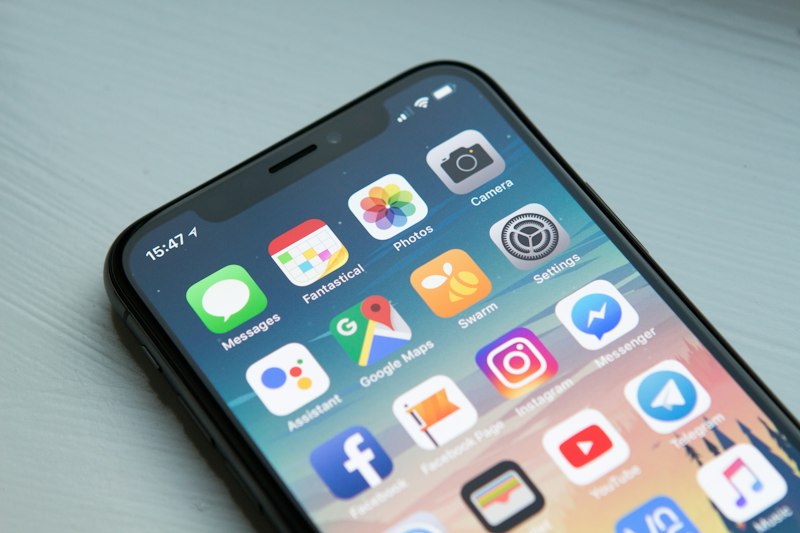
Most of the visitors who land on your website are not sitting at a desktop computer. They are on a phone, standing in a queue, commuting on a train, or lying on the couch. They expect pages to appear instantly, and when they do not, they leave. This is why mobile website speed is one of the most important factors for the success of any site in 2026.
In this guide, we will explain why mobile page speed matters more than ever, how it directly affects your Google rankings, and the practical steps you can take today to make your website load faster on smartphones.
Table of Contents
- Why Mobile Speed Matters More Than Ever
- How Mobile Speed Affects SEO
- The Core Web Vitals Mobile Checklist
- Common Causes of Slow Mobile Pages
- How to Optimize Your Website for Mobile Speed
- How to Measure Mobile Page Speed
- Frequently Asked Questions
- Conclusion
Why Mobile Speed Matters More Than Ever
More than 60 percent of all web traffic now comes from mobile devices. That number has been climbing for years, and it is not slowing down. People search, shop, compare, book, and buy on their phones every single day. If your website loads slowly on those devices, you are losing the majority of your potential customers before they even see your content.
The data behind this is sobering. Studies consistently show that 53 percent of mobile visitors leave a website that takes longer than three seconds to load. Every additional second of delay increases bounce rates and reduces conversions. For a small business, that does not just mean fewer page views — it means fewer phone calls, fewer enquiries, and fewer sales.

Mobile users are also far less tolerant than desktop users. On a desktop, a visitor might wait a little longer because they have a stable connection and a big screen. On a phone, connections are slower, data plans are limited, and attention spans are shorter. If your page takes five seconds to load, many users will simply assume your business is not worth their time.
Is Your Mobile Site Fast Enough?
Find out in seconds with a free, instant analysis of your website's load time and performance. See exactly where your mobile pages stand right now.
🚀 Check Your Website SpeedHow Mobile Speed Affects SEO
Google uses mobile-first indexing. That means Google primarily looks at the mobile version of your website when it decides how to rank you in search results. If your mobile pages are slow, your rankings suffer — even for people searching on a desktop computer. Your mobile experience is no longer a side consideration. It is the experience Google evaluates.
Page speed is a confirmed ranking factor for both mobile and desktop searches, but its impact is felt most strongly on mobile. When two websites offer similar content, Google tends to rank the faster one higher. A slow mobile site does not just frustrate visitors. It actively holds your search rankings back.
Beyond rankings, mobile speed shapes how people perceive your business. A fast mobile website signals professionalism, reliability, and respect for the customer's time. A slow one suggests neglect and poor management. In a competitive market, that perception can be the difference between winning and losing a customer.
The Core Web Vitals Mobile Checklist
Google measures mobile user experience using three metrics called Core Web Vitals. Understanding them helps you know exactly what to improve. If you are new to these metrics, our complete Core Web Vitals guide explains each one in detail. Here is a quick summary you can act on:
- LCP (Largest Contentful Paint) — how fast the main content loads. Aim for under 2.5 seconds.
- INP (Interaction to Next Paint) — how quickly the page responds to taps and clicks. Aim for under 200 milliseconds.
- CLS (Cumulative Layout Shift) — how stable the page layout is while loading. Aim for a score under 0.1.
These three metrics capture most of what makes a mobile experience feel fast or slow. If your LCP is high, your main content is taking too long to appear. If your CLS is high, elements are jumping around while the page loads. Fixing these issues is the fastest route to better mobile performance and better rankings.
Common Causes of Slow Mobile Pages
Before you can fix a slow mobile website, you need to know what is causing it. The most common culprits are:
- Large, uncompressed images that take too long to download on mobile connections
- Too many JavaScript files and third-party scripts that block rendering
- Slow server response times, often caused by overcrowded or distant hosting servers
- No browser caching, so returning visitors download everything again
- Too many fonts, plugins, and widgets that add unnecessary weight
The good news is that almost all of these problems are fixable. Some are quick wins that take minutes. Others, like switching to faster hosting, take a little more effort but deliver the biggest long-term improvement.
How to Optimize Your Website for Mobile Speed
Here are the most effective ways to speed up your website for mobile visitors, ordered from quickest to most impactful.
Compress and Resize Your Images
Images are the heaviest files on most pages. A photo taken from a modern camera can be several megabytes, and a page full of them can take forever to load on mobile. Compress every image and resize it to the size it will actually be displayed at. Modern formats like WebP offer excellent quality at a fraction of the file size. Our image optimization guide walks through the process step by step.
Remove or Defer Heavy Scripts
JavaScript and third-party scripts like trackers, chat widgets, and social media embeds block the browser from rendering your page. Audit your site and remove anything you do not truly need. For scripts you must keep, load them only when needed instead of on every page.
Use Fast, Reliable Hosting
Your hosting provider determines how quickly your server responds to every mobile request. Slow, overcrowded servers make every page heavy. Choosing a provider with fast infrastructure, like Host Better, gives your mobile visitors a much better experience from the moment they tap your link.
Enable Caching and Compression
Browser caching lets returning visitors load your site almost instantly, and compression shrinks the size of your files before they travel across the network. Both are easy to enable and make a noticeable difference on mobile. Our website caching guide explains how to set them up correctly.
See Where Your Mobile Speed Stands
Run a quick speed check on your website and get a clear picture of load times and performance issues before you start optimizing.
🚀 Check Your Website SpeedHow to Measure Mobile Page Speed
You cannot improve what you do not measure. Start by testing your website and recording your current load time. Then make your improvements and test again. You should see real progress after each change.
- Run a speed test on your homepage and note the load time and score
- Open your site on an actual phone using mobile data, not just Wi-Fi
- Check the mobile tab in performance tools to see how your pages behave on a phone connection
- Look at your Core Web Vitals report to see how real visitors experience your site
- Test again after every change so you know what actually worked
Test from a real phone whenever possible. Emulators are useful, but nothing matches how a site actually feels on mobile data with a mid-range device. That is the experience your customers have, and that is the one that matters.
Frequently Asked Questions
Why is my website slower on mobile than on desktop?
Mobile devices have slower processors, less memory, and often connect over mobile data rather than fast broadband. Larger file sizes and heavy scripts also take longer to process on a phone, which makes the same website feel noticeably slower.
Does mobile speed really affect Google rankings?
Yes. Google uses mobile-first indexing and treats page speed as a ranking factor. If your mobile pages are slow, your rankings can suffer across all devices, not just phones.
What is a good mobile page load time?
Aim for under three seconds, ideally under 2.5 seconds. Google uses an LCP target of 2.5 seconds for the main content, and faster pages consistently perform better with both visitors and rankings.
What are the quickest ways to speed up a mobile website?
Compressing images, removing unused scripts, enabling browser caching, and switching to faster hosting usually deliver the biggest improvements with the least effort.
Make Mobile Speed Your Advantage
Check your website's speed now and find out exactly what is slowing your mobile pages down. A fast site means more visitors, better rankings, and more customers.
🚀 Check Your Website SpeedConclusion
Mobile website speed is not a technical detail for developers to worry about. It is a business factor that affects your rankings, your reputation, and your revenue. More than half of your visitors are on phones, and most of them will leave if your pages take longer than three seconds to load.
The fixes are well known and within your reach: compress images, cut heavy scripts, enable caching, and choose fast hosting. Start by measuring your current speed, then work through the improvements one by one. Every second you save keeps more visitors on your site, and every visitor you keep is a potential customer.